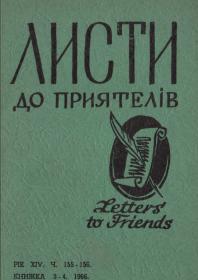
Sartre and Kulish. In Lysty do Pryyiateliv, P. 3-4 (155-156), 1966, pp. 37-42.
Keywords:
existentialism, totalitarianism, Jean-Paul SartreSynopsis
The article examines the problem of personal and collective responsibility for the crimes of totalitarian regimes, drawing on Jean-Paul Sartre's play The Condemned of Altona. The figure of Franz von Gerlach is interpreted as an embodiment of the conflict between duty and conscience, and as an illustration of the destructive consequences of blind obedience to orders. The author undertakes a comparative analysis with Mykola Kulish's play The People's Malakhii, identifying shared motifs: the hero's self-isolation, utopian projects, and responses to historical catastrophe. At the same time, a fundamental distinction is drawn: in Sartre, the theme of guilt predominates, whereas in Kulish the emphasis falls on a critique of social passivity. In conclusion, Shcherbyn emphasizes that these ideas emerged in Ukrainian literature well before their wider dissemination in other contexts, yet were marginalized by censorship, despite high regard and recognition from the international intellectual community, including Romain Rolland.
Downloads